How It Works
Fund the town.
Curate it.
Compete to live in it.
A new raise opens every month, and it runs in the app. You pledge once to enter, then tag the businesses, architecture and third places you want nearby — and rank the rewards those businesses offer you back. When the raise closes funded, the town gets built to what its pledgers chose, and the people who took part the most are the ones who move in.
Five more roles compete in the same raise — businesses, landowners, banks and architects from the app, and counties through a separate qualification they then track there. Each gets its own view. Switch between them below.
Your view of the app
Pledge · Town 001
Authorised- Pledge · 2BR
- $150.00 · once
- WFG Rider
- +50% · $225.00
- Charged
- Only if funded
- Then held by
- OCIO custodian
- Draft stage
- Stage 4B · Vine Garden waitlist
- Rewards tier
- Tier 2 · engaged
Scored on pledge history and social signal (30% each), then fit, alignment, rankings and group bonus. Pledge amount is not an input.
County bid · Raise 001
Assembling- LOI acreage
- 19.2 / 16 sq mi min
- PILOT rate bid
- $0.0180 /sqft/mo
- PILOT activates
- Year 8
- SPV economic stake
- 51%
- 529 allocation
- $1.2B · all enrolled
- Land + site budget
- 3% · $1.8B / year
One county announced each Labor Day, winning all twelve of that year’s raises. Lose and you stay qualified for the next.
Spice Tray bid · Town 001
Gathering tags- Pledger rankings
- 412 this raise
- Jobs pledged
- Up to 49 · ACA cap
- Job pledge fee
- Inverse to salary
- Rewards offered
- Tier 1 + Tier 2
- Lease renewal
- December steward vote
- Demand data
- Aggregate only
Entry is open to any verified business. Selection weighs pledger rankings and job pledge strength 50/50.
Parcel · LOI submitted
Under bid- Parcel
- 640 acres · 1 section
- Price per acre
- You set it
- Annuity rate
- You set it
- Ownership held
- 12 mo minimum
- Entity
- Named individual only
- Entitlement
- Handled by URBAL
Keep farming The Commons after the sale — bid a rent rate per 20-acre parcel.
OCIO mandate · Raise 001
Open bid- Escrow under custody
- $5.00B
- Management fee
- Your bid
- Escrow terms
- Your bid
- Draw schedule
- Milestone-verified
- Pre-announce interest
- → Civic Anchor
- Mandate
- 12 raises / yr, each rebid
Decided on the bid alone. No panel review, no county involvement.
Submission · Outer Wall
In review- Facade section
- 80 ft
- Style code
- 1 of 8 permitted
- Cornice + bay
- Fixed by code
- Material palette
- Stone · timber · lime · zinc
- Cost visibility
- Blind — none shown
- Licence
- Copyleft · public catalogue
Commission is capped at 1% of build cost. Dwelling sqft, pledger rating and machine time split that 1% across winners — they never lift it.
First — what you're competing for
One square mile, and everything in it is a choice someone made.
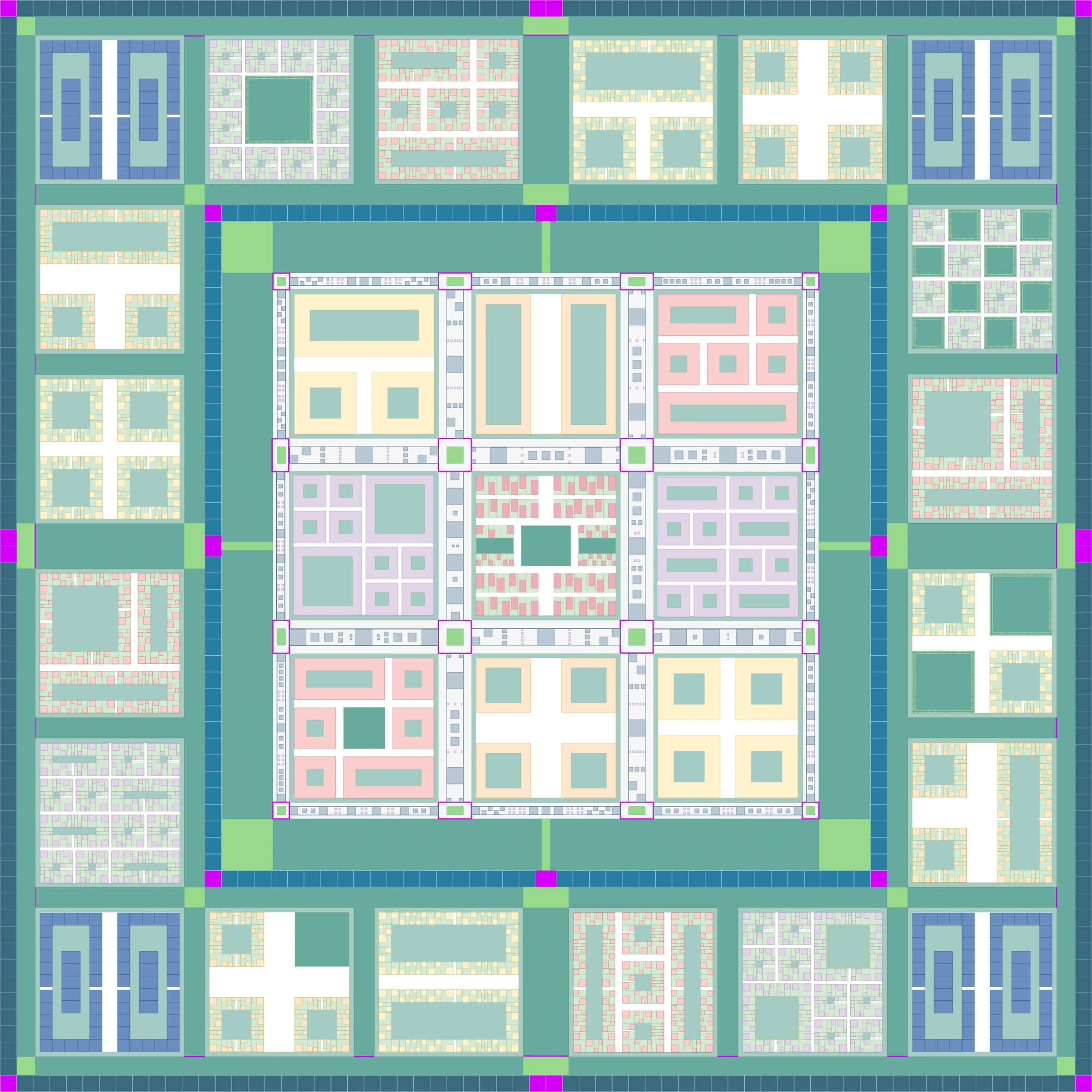
Before any of the steps below mean anything, this is the thing being funded: a car-free town of twenty-nine blocks, built in stone, where the shops, clinics, schools and third places are chosen by the people who pledged for it.
The URB
The block the whole town is assembled from — 720 feet square. Twenty-nine of them make a Blend: one square mile, a target of 25,000 people, complete on its own.
Five minutes to everything
Twenty-four Spice Tray corridors thread the town, carrying up to 500 third-place buildings. Groceries, a clinic, a school, a bar — all inside a five-minute walk, because no road grid separates them.
Who fills it is curated
The businesses in those corridors are not leased to whoever pays most. Pledgers tag what they want and rank what is offered back, and that ranking is half of how each business is scored.
Built to last, priced to income
Stone, mass timber and zinc, on geometry proven over centuries. The largest line in your monthly fee comes off a published formula tied to state median income — never to market value — and the lines that can move need the arithmetic published and a steward vote before they do.
The pledger's path
Sign up. Pledge. Curate. Compete.
Six steps from creating an account to being drafted into a town. Counties, businesses, landowners, banks, and architects each run a different path through the same raise — see the stakeholder model for how each one wins.
Step 1 of 6
Sign up
Create your URBAL account — it's the one account you'll use across every raise, reward, and vote in the ecosystem.
Step 2 of 6
Create your profile
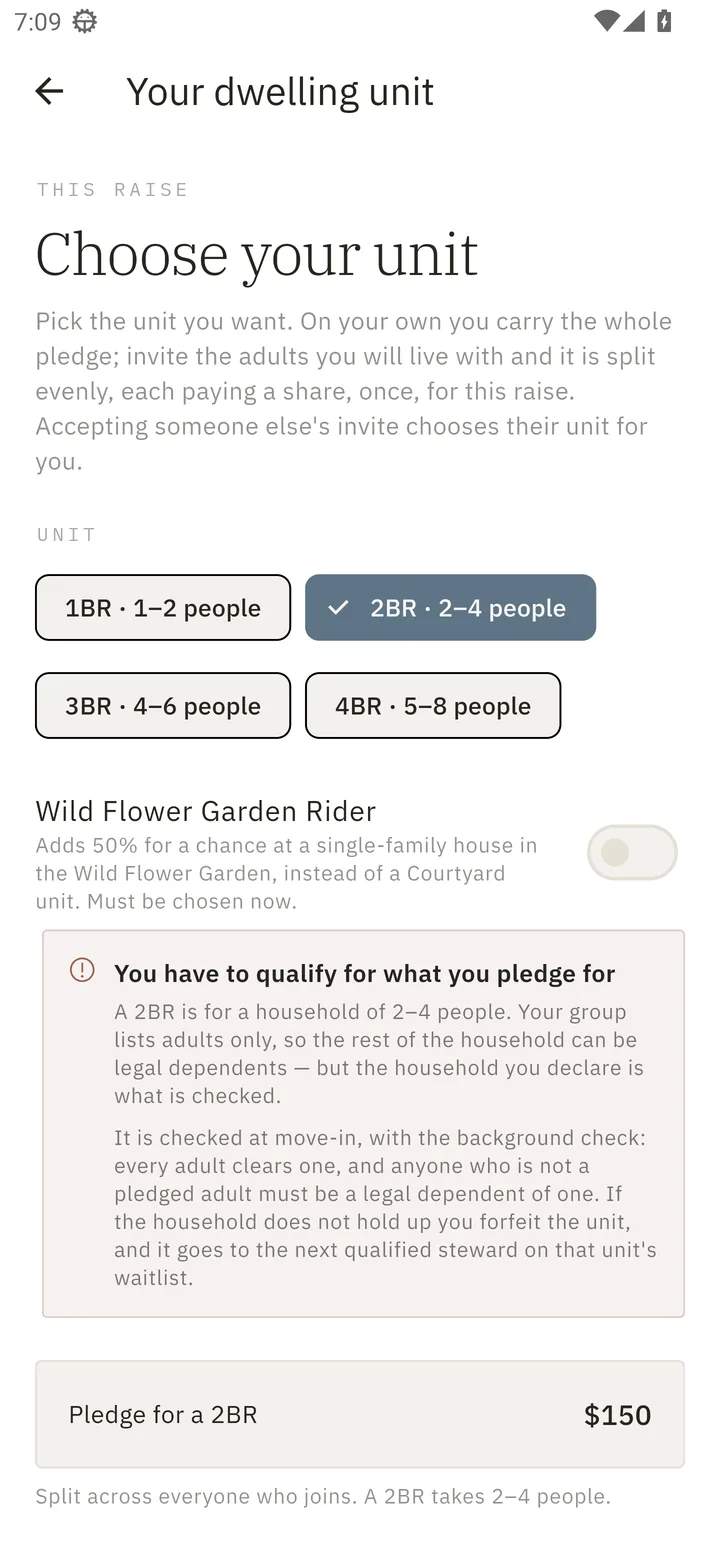
Pledging happens in the Courtyard URBs, 1 to 4 bedrooms. The Wild Flower Garden is reached by adding the Rider at pledge time (+50%), not by picking it, and the Orchard Garden and Vine Garden walls are waitlists. 5BR and 6BR homes are earned during the raise, never pledged for.
Step 3 of 6
Pledge to earn rewards
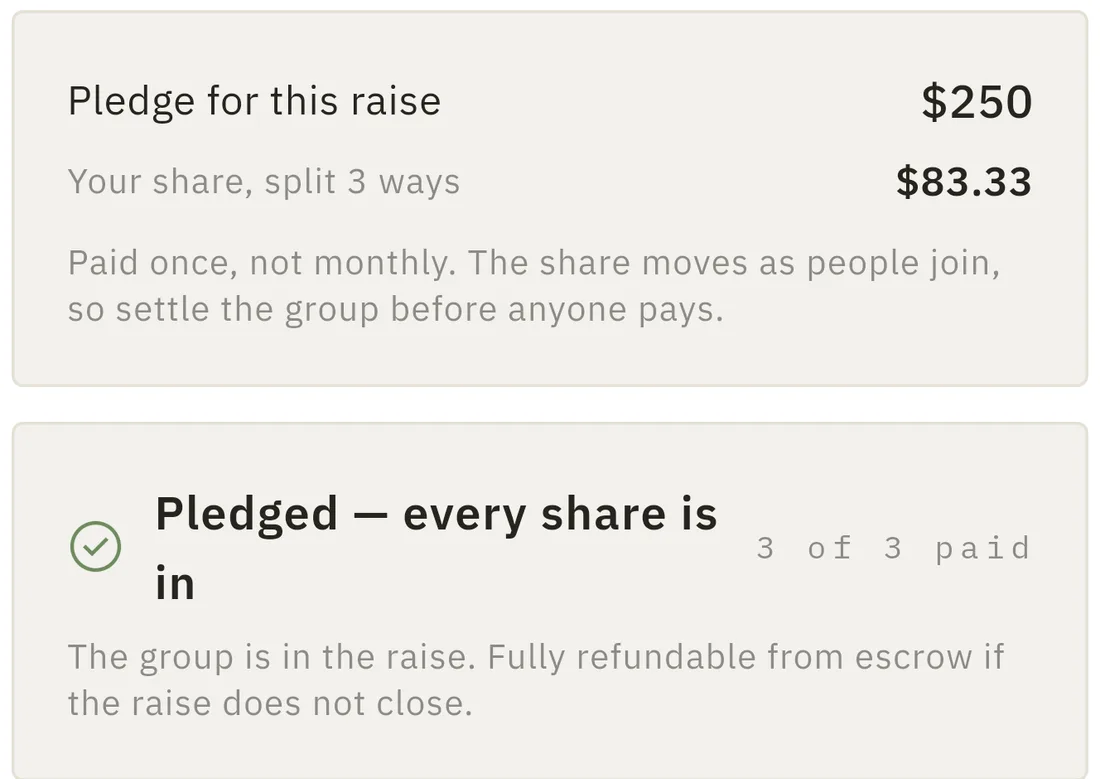
Lock your spot with a single pledge — $100 for a 1BR up to $250 for a 4BR. Your payment method is only charged once the $5B threshold is crossed, so a raise that falls short costs you nothing. Rewards start the moment you pledge — businesses competing for a lease in your town put real offers in front of you years before a stone is cut, and the top tier is held for stewards who get selected.
Step 4 of 6
Curate & rank
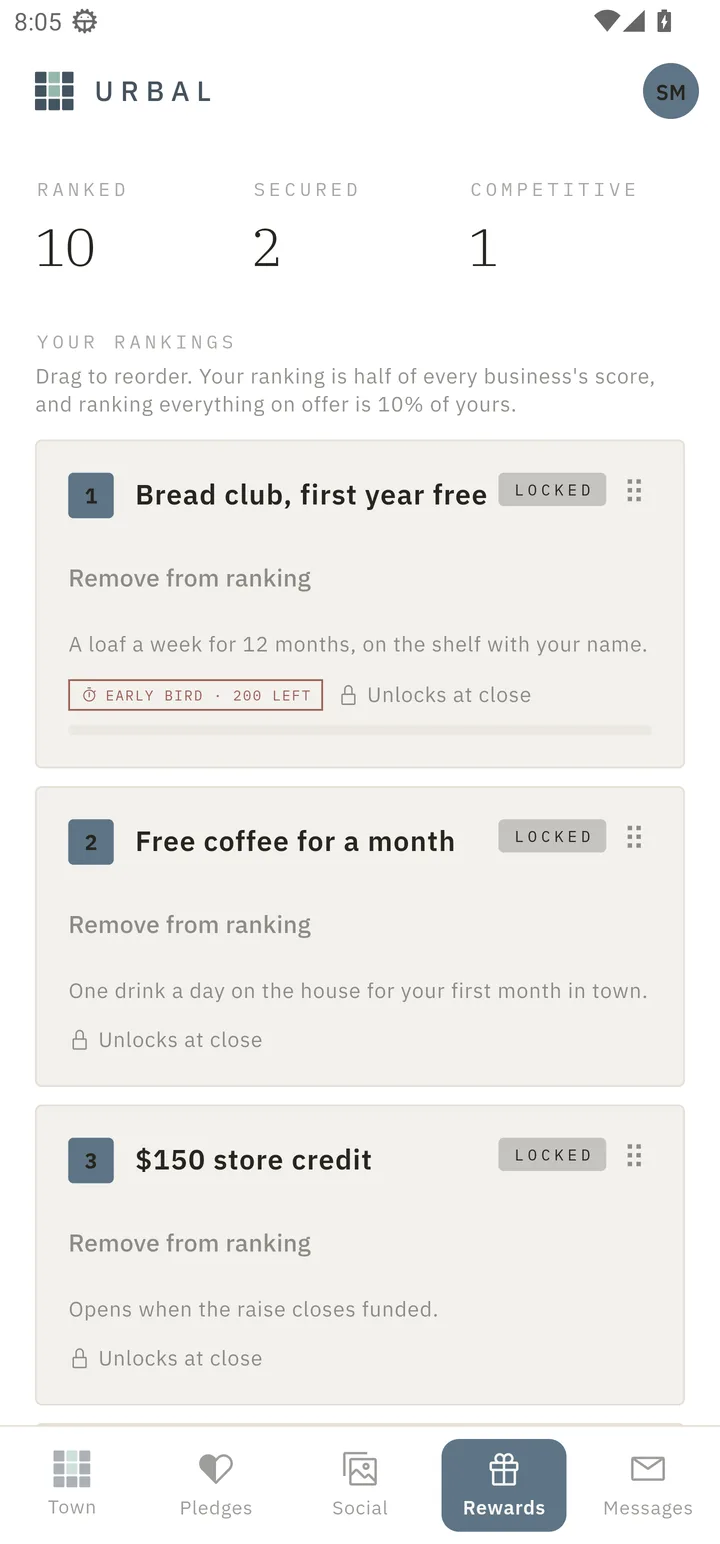
Tag the merchants, architecture, and third places you want in your town, then rank the rewards they are offering. Ranking is not a wishlist — your selections are half of how every business is scored, so the offers you pick decide who actually gets a lease.
Step 5 of 6
Engage
Respond to URBAL polls and posts. Ongoing engagement counts toward your profile the same way tagging does — it's a running signal, not a one-time form.
Step 6 of 6
Compete
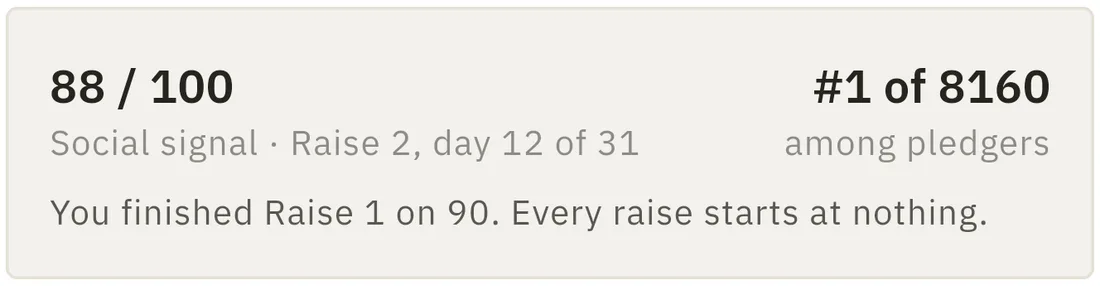
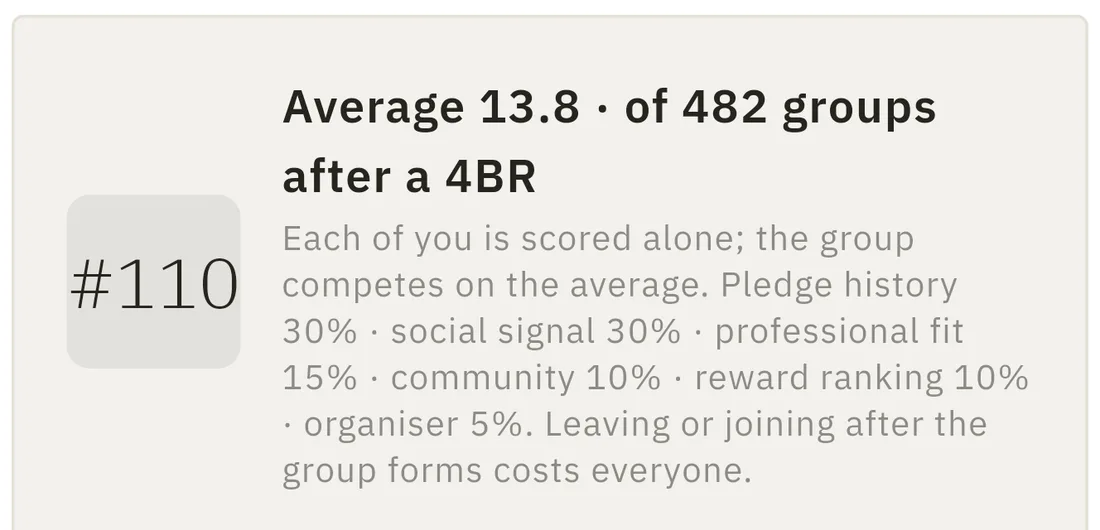
You're ranked only against other pledgers who asked for the same number of bedrooms — a 2BR competes against 2BRs, never against 4BRs. The best-matched, most-engaged profiles in that pool are selected first — scored on pledge history and social signal quality at 30% each, then professional fit, community alignment, how completely you ranked the rewards, and a group-organiser bonus. The draft then places them zone by zone.
Screens from the URBAL app. Figures shown are from a demo raise, not live totals.
Then: the raise closes, and the build starts
Once the raise crosses $5B, escrow releases and the winning county is announced on Labor Day. Construction runs about 36 months. On Move-In Day your Proprietary Lease Covenant activates for the term you chose — 2, 4, 8 or 16 years — and this app’s job is done. It curates the town; it does not run one. Governing the place you now live in happens on URBAL OS, where every December vote on what stays in the town is cast and recorded. See what living there is like →
The loop
Posting is not engagement bait. It is the scoring mechanic.
Raises run every month, and your score carries across all of them. Social signal is 30% of it and pledge history another 30%, so the single largest thing you control is simply turning up — month after month, raise after raise. Nothing resets, and nothing can be bought.
Tag what you want
Reels, polls and boards — URBAL hands you the format and tells you what each one is for. Tag the bakeries, clinics, gyms and third places you want within a five-minute walk. Businesses cannot buy their way onto that list; they can only be asked for.
Your tags become the Blend
Every pledger's tags join one graph. That graph decides which businesses qualify, how the Spice Tray corridors are laid out, and which architectural submissions get built. It is the town's demand map, drawn by the people who will live in it.
Rank what is offered back
Businesses answer that signal with real rewards — usable while the town is still being built, not coupons at opening. You rank them, and the ranking is half of how each business is scored.
The reward loop
You don't just receive the rewards. You rank them — and the ranking picks the businesses.
Rewards from day one
Every business competing for a lease puts a reward on the table that reaches every pledger — not a coupon at opening, an offer you can use while the town is still being built. A second tier is reserved for stewards who are selected.
Your ranking is half their score
Rank the offers you actually want and that ranking becomes 50% of how the business is scored — the other half is the jobs and salaries it pledges. Businesses compete by offering you more, which is the whole point. See it from their side →
The other five paths
Everyone else is competing too — and they can all see where they stand.
A raise is not one competition, it is six running at once. A county is racing six other counties for the town. A café is racing fifteen other businesses for six Spice Tray slots. Each one sets its own terms, sees its own rank, and finds out on Labor Day.
Counties
- What they do
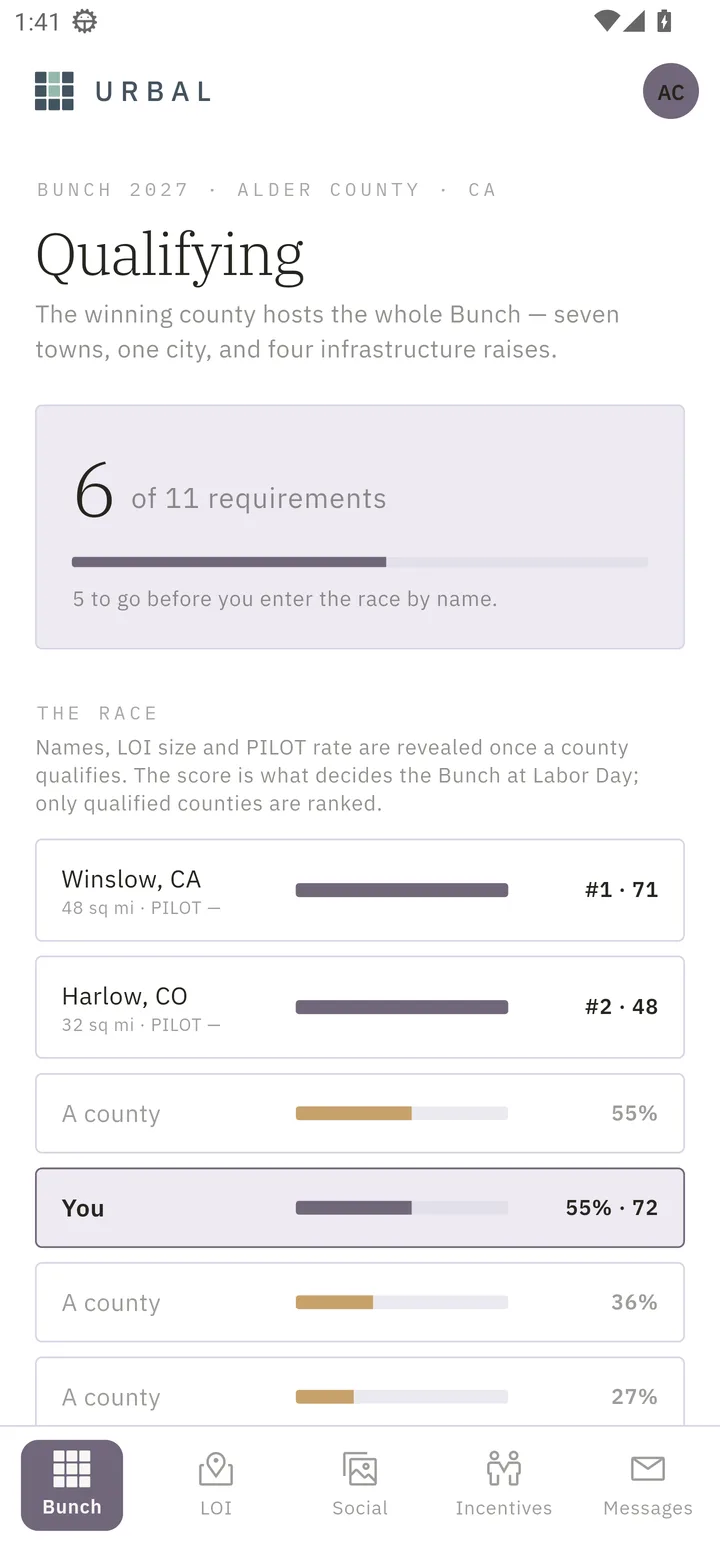
- Assemble a letter of intent over 16 to 64 square miles of the PLSS grid, adopt the form-based code, and clear eleven qualification requirements. That part happens on the web — the app is where officials watch the race.
- How they're ranked
- Your own row is named to you and anonymous to everyone else. Qualified counties are named once they qualify; the rest show only as "a county" and a percentage, so nobody can see who they are losing to until it is settled.
- What they win
- A whole year. One county is announced each Labor Day and takes all twelve raises, because twelve raises are one Bunch — 3% of the $60B raised, $1.8B, to buy the LOI land, clear and shape the site and lay the infrastructure, the remainder theirs to keep. Plus $1.2B funding 529 accounts for every enrolled public-school student. Both land on Labor Day, before construction starts, and PILOT does not begin until Year 8.
Businesses & Employers
- What they do
- Sign up with an EIN and one attestation, then pledge jobs — headcount and salaries — which sets both your budget and your commercial footprint at 160 sqft per job. Revisable until the raise closes.
- How they're ranked
- You are ranked inside your own category, never against the whole town, and the score is an even split: half is how pledgers ranked your rewards and tagged you, half is the strength of your job pledge. Selection is provisional until the raise closes.
- What they win
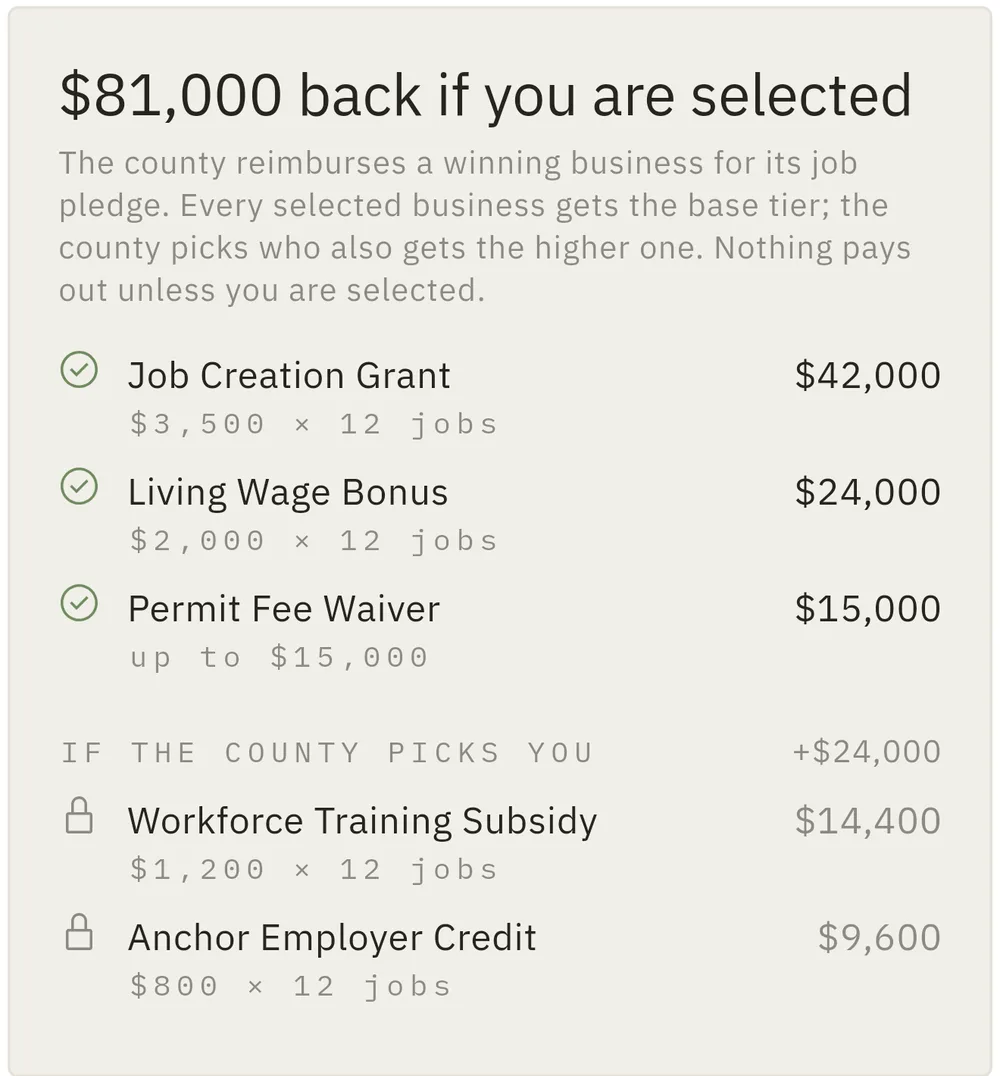
- A lease in the zone your business type belongs to — and the county reimburses your job pledge. The app prices that against your actual headcount rather than quoting a brochure figure.
Landowners
- What they do
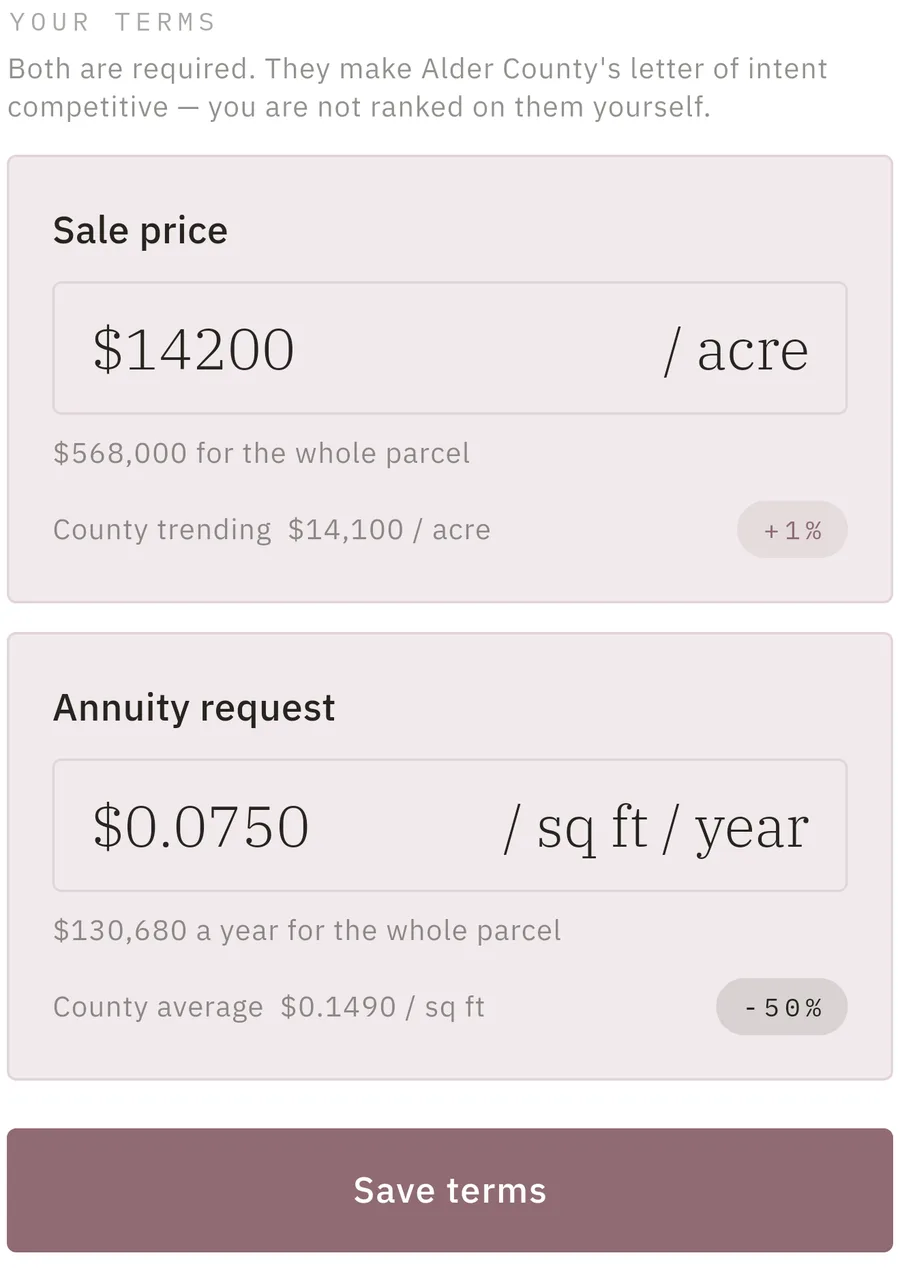
- List the parcel, upload deed, title, survey and LiDAR, then name two numbers yourself: a sale price per acre and an annuity rate per square foot per year. Both are editable until the raise closes.
- How they're ranked
- Each number is shown against what the county is trending, so you can see whether you are above or below the market you are competing in. You are not ranked personally — your terms are what make the county's letter of intent competitive.
- What they win
- The sale, plus an annuity that keeps paying on the land. The app totals both for your actual acreage as you type them.
Banks
- What they do
- Submit a sealed bid on the escrow mandate — management fee in basis points, draw cadence, and investment capability. Revisable until the raise closes, and decided on the bid alone: no panel, no county involvement.
- How they're ranked
- Mandates are held per Bunch and rebid every raise, twelve times a year, so the record you are building is visible alongside what is still open.
- What they win
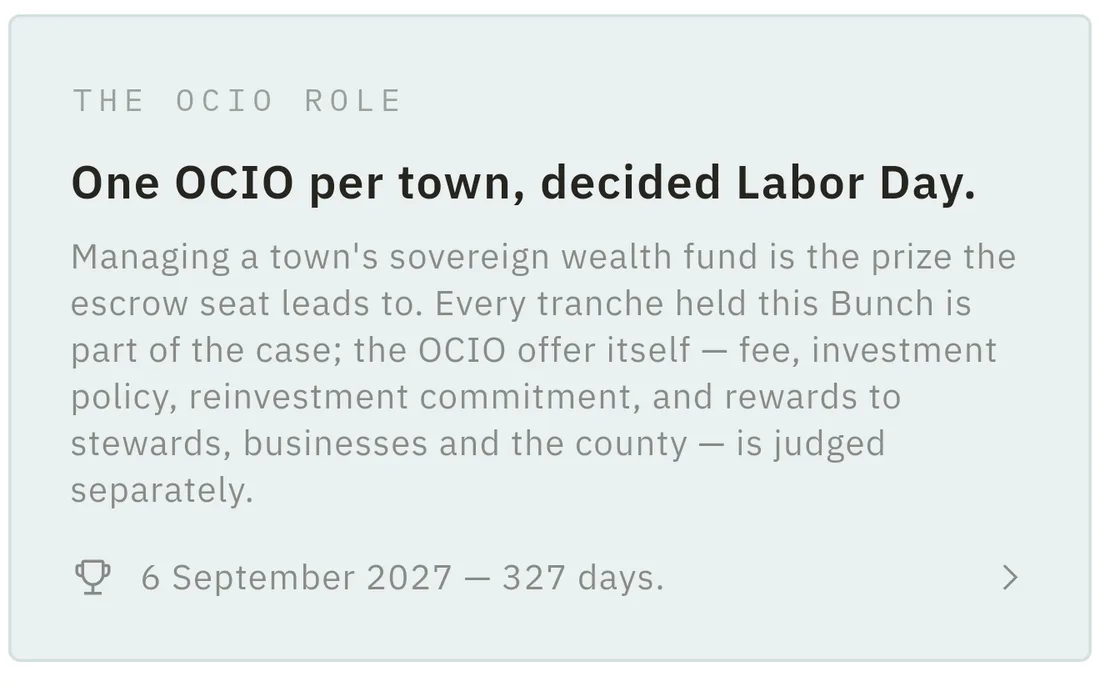
- Custody of the raise's escrow, released against eleven milestone gates — and the escrow seat is the route to managing the town's sovereign wealth fund, decided on Labor Day.
Architects
- What they do
- Publish a studio portfolio and submit facade sections under your own name, to one of eight permitted style codes, blind to cost — the fee formula never sees the drawing and the pledgers never see a budget.
- How they're ranked
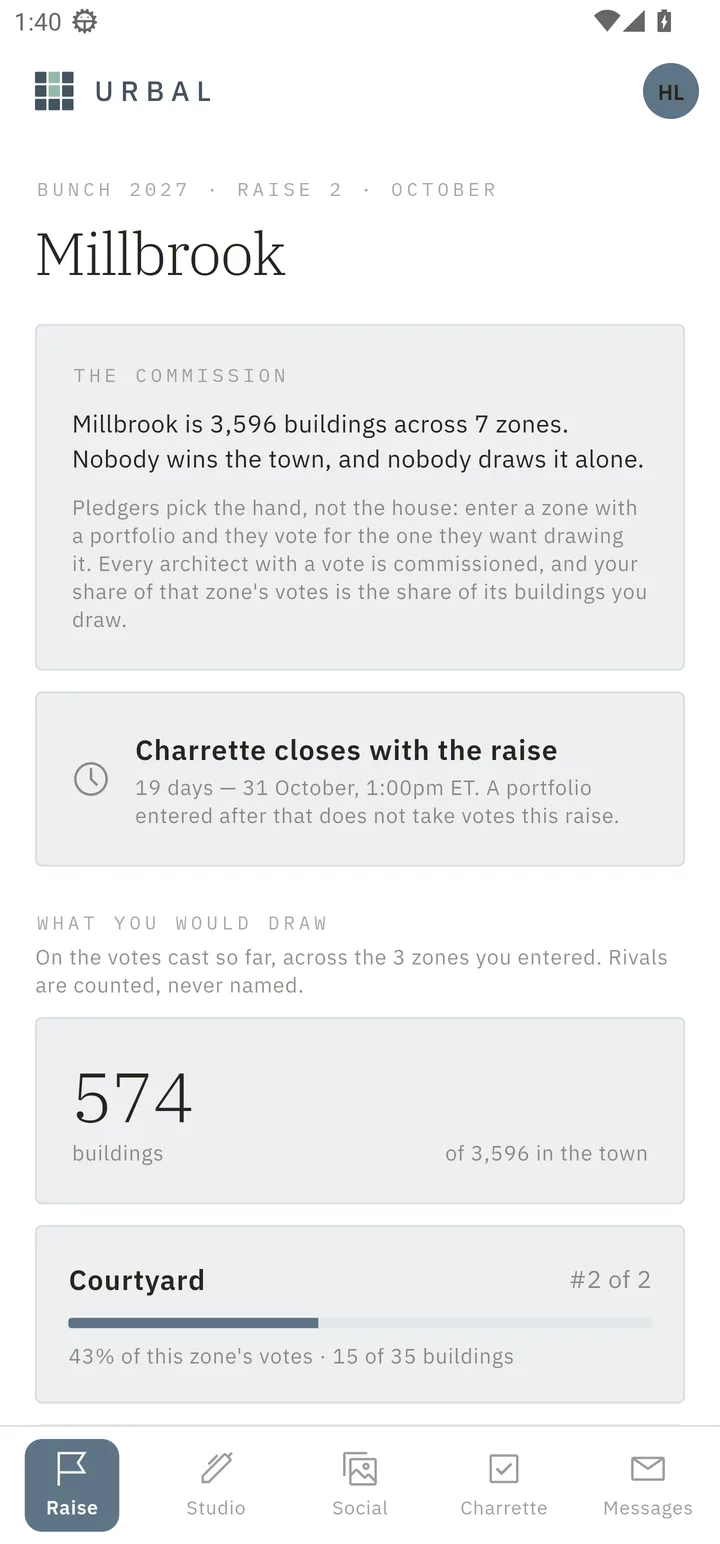
- The app tracks your allotment — how many of the town's buildings you have won the right to draw, out of every building in it — and your vote share zone by zone. Careful with the word commission here: in the app it labels that allotment, while in your contract it means the fee.
- What they win
- A professional services commission capped at 1% of each building's construction cost — a ceiling, never a negotiation. Dwelling square footage, the rating pledgers gave the design and normalised machine time decide how that 1% divides across a raise's winners, not whether any one can exceed it. You compete for volume, not margin. Plus a public, copyleft catalogue entry under your own name.
Screens from the URBAL app. Figures shown are from a demo raise, not live totals.
Your move