Daycare through university
School is one floor
above your home.
Daycare, K–12, two years abroad, and a college pipeline — all included in the monthly fee, all governed by the stewards who live here. No tuition bill. No student debt trap.
Costed to a ratio
Teaching is funded to a set student-teacher ratio, not to whatever a budget leaves over.
Rooftop knot-garden classrooms
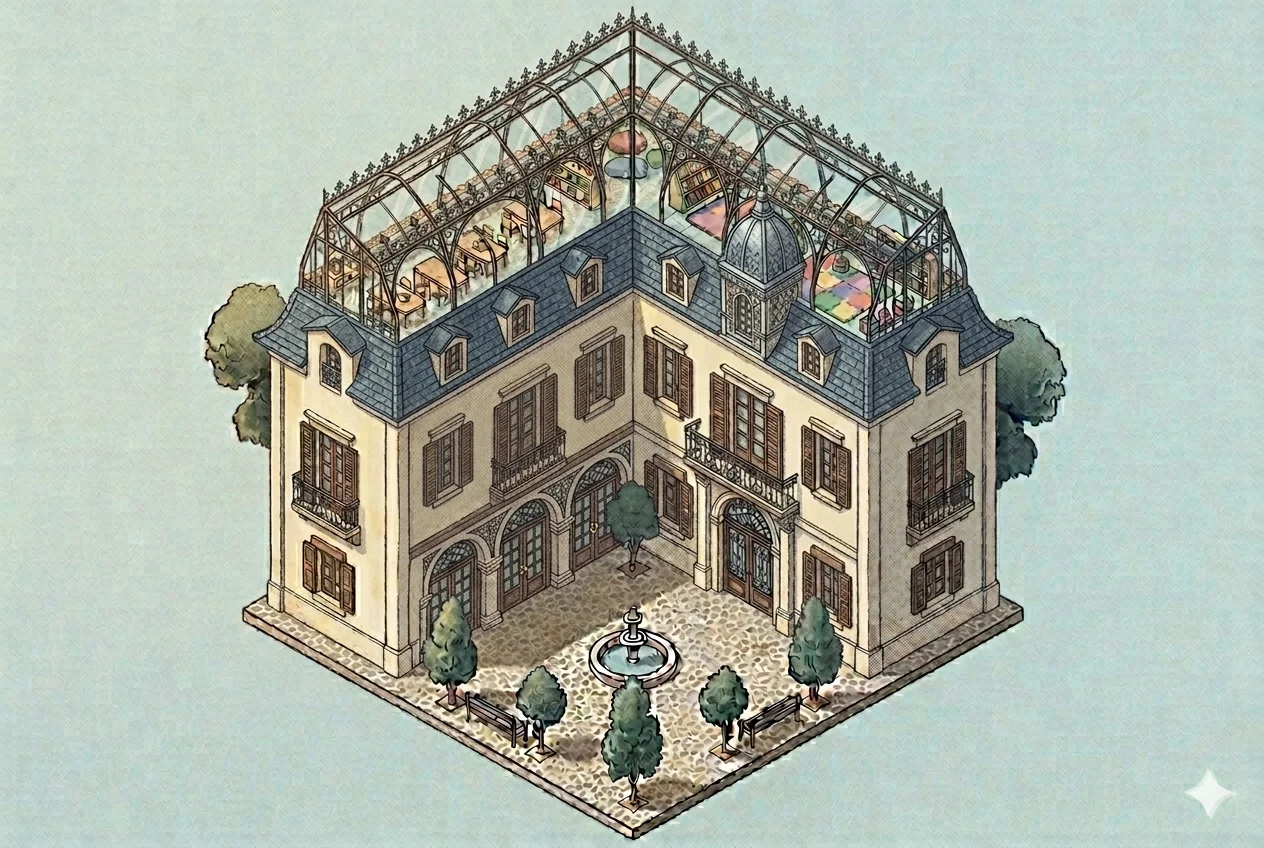
The mansard of every URB building is a dedicated rooftop knot-garden campus. No commute.
Teacher LLCs
Educators earn from the community they serve, not a distant school district.
Free daycare
Ages 0–5. On the URB rooftop. Staffed to a set ratio. Fully covered.
2-yr growth abroad
Two years abroad after high school — Technical/Trades or Liberal Arts track.
Collegiate system
Every town has its college. All of them belong to the URBAL University System.
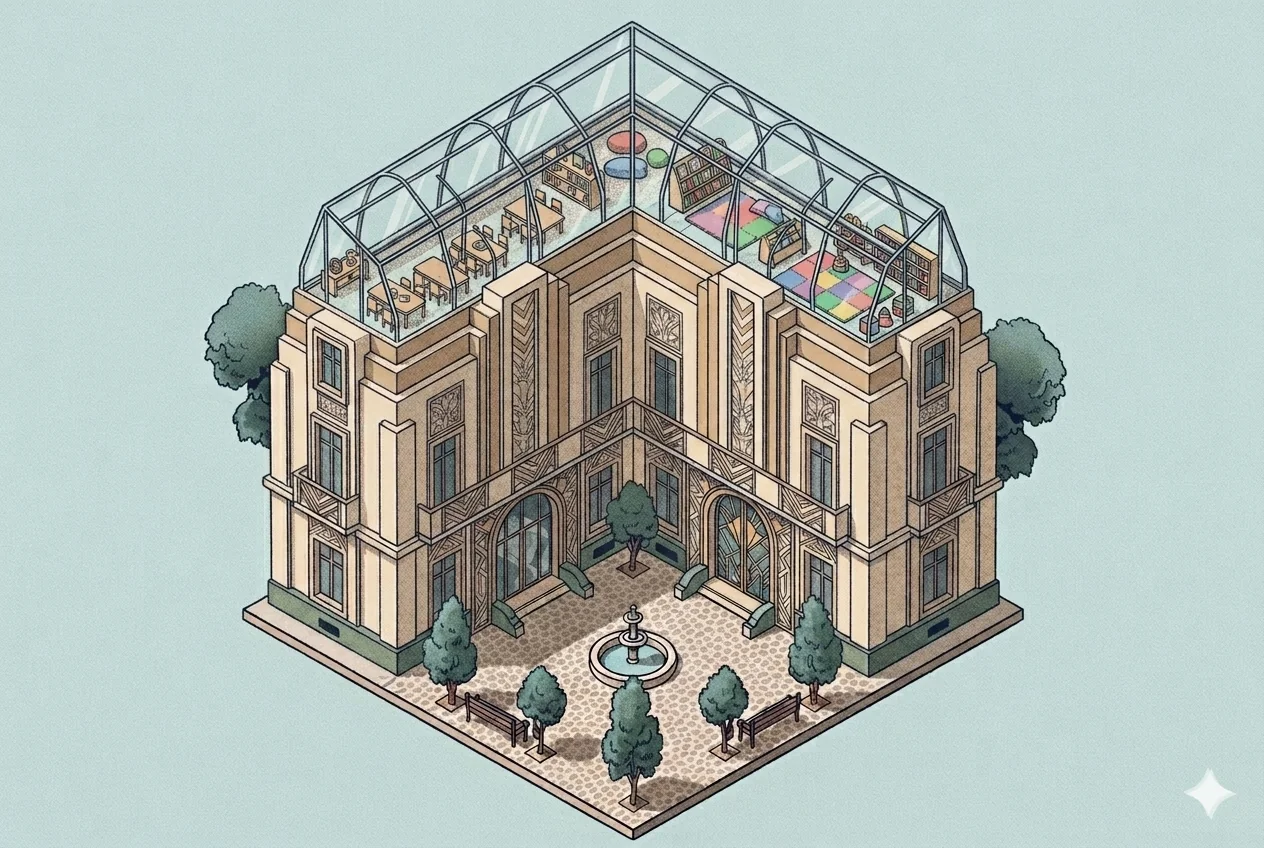
School is one floor up.
No bus, no drop-off, no commute. K–12 in rooftop knot-garden classrooms above the dwellings, daycare ages 0–5 co-located — all included in your monthly fee.
Teacher LLCs
Teachers earn from the community they serve — annual steward vote, no tenure, accountable to the people next door.
The Grand Tour
Two years abroad. Then the associate. Then, if you want it, the bachelor's.
The order matters. High school ends, and every graduate spends two years abroad on one of two tracks — Technical and Trades, or Liberal Arts. Only then do they come home to the town college for the associate, and only then, if their path requires it, on to the city college for the bachelor's. The GI Bill generation arrived at college with military service behind them; they had seen the world before they sat in a classroom. This is URBAL's mechanism for ensuring every graduate arrives the same way, regardless of family income.
Year 13
Technical, trades or science — a placement in real production conditions URBAL does not control
Year 14
Liberal arts, business or design — the fluency in judgment that direct democracy demands
URBAL College
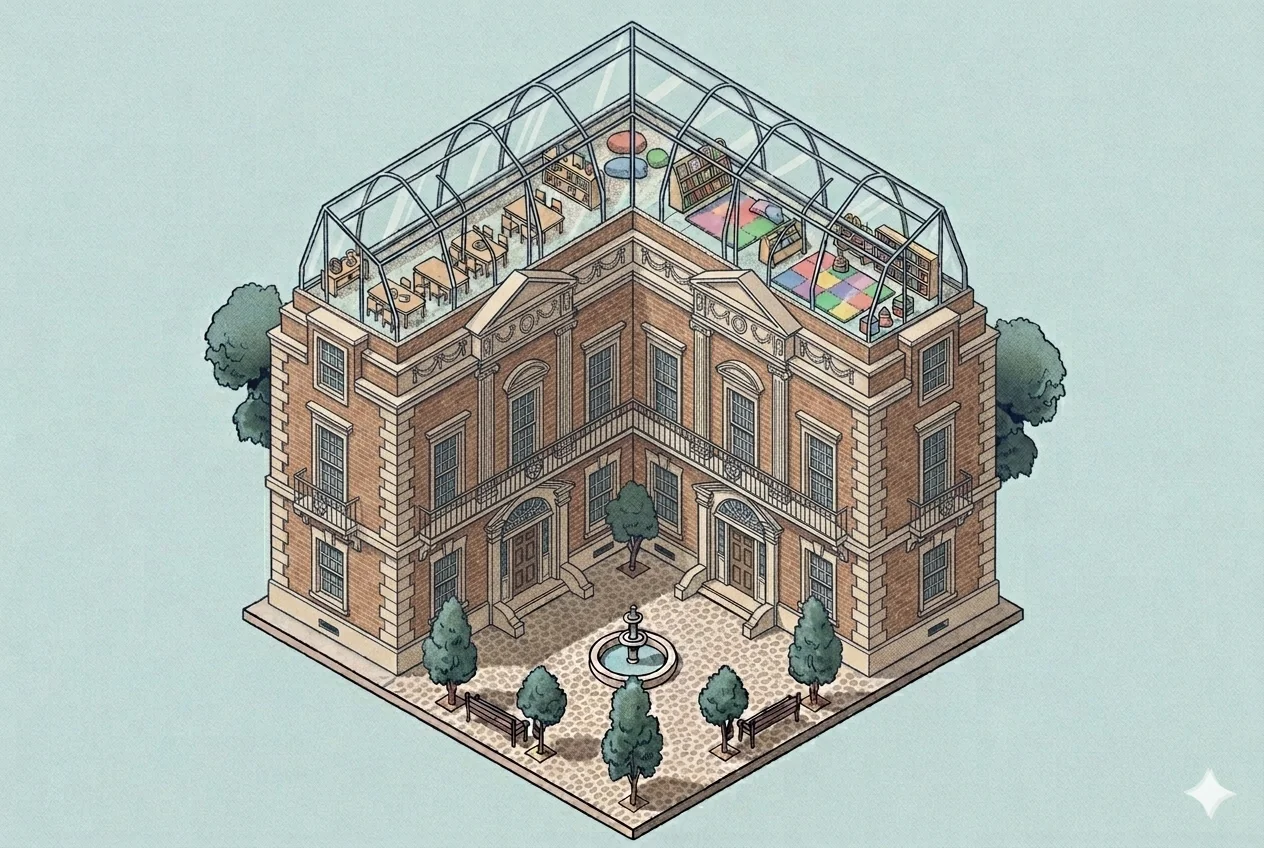
Your college is your house. The University grants the degree.
URBAL runs an Oxford-style collegiate system. The URBAL University System awards the degrees; the colleges are where students actually live, are taught in tutorial, and belong. Every town has its own college, and every college is part of the System. Both tiers teach the same way — small groups, written work every week, and the expectation that you defend your thinking out loud rather than absorb it quietly.
Your town college
One per town, and it is your house in the Oxford sense — where you live, are taught in tutorial, and belong for the duration. It grants the two-year associate, and its places are for the children of stewards: the fee that built it has been paid every month by the people who live there.
Built for employment
The town colleges train for a trade, technical or knowledge-work, and the measure is whether you can do the job on the day you finish. They are not junior research departments and do not pretend to be.
The city college
One per Bunch, in URBAL City, and the only research institution in the System. Bachelor's, master's and doctorates are awarded here. It is open to the world and admits on merit alone — this is where URBAL recruits top global talent, and where admission is meant to be harder to win than any Ivy League place.
Take a closer look
Pre-K to 22. Every stage. All included.
Daycare
Daycare
Ages 0–5. Rooftop. Staffed to a ratio.
Universal daycare for ages 0–5 sits on the rooftop knot-garden mansard of every URB building — the same level as K–12, separated by age group. No waitlist, no separate billing, no subsidy application: it is inside the monthly fee every steward pays, whether or not they have children. Staffing is costed at one adult to five children, with childcare salaries benchmarked at 30% below the national average like every other clinical and educational role. How many children a given town actually has is not fixed in advance — it follows from which pledgers are selected into that cohort.
K–12
Funded to a ratio. Resident educators.
The education line in your fee is not a budget somebody allocates and then divides — it is derived from a staffing model and published in full. Three inputs: the share of the town that is school age, a student-teacher ratio, and teacher salaries benchmarked at 30% below the national average. The model is costed at one teacher per twelve students, and the ratio is the constraint: class sizes cannot exceed it without a steward vote to change the allocation. The actual number of students and teachers in any particular town is not set in advance. It follows from which pledgers are selected into that cohort, so a town that draws more families runs a larger school than one that does not, and the model scales with it. Teacher LLCs are accountable through the Mainstay annual review, and every December stewards vote on renewal.
Teacher LLC model
Educators earn from community, not district.
Teachers are organized as small professional LLCs — typically 3–5 educators covering a grade range. They hold their lease on the rooftop knot-garden campus the same way a café holds its Mainstay lease on the Spice Tray: by demonstrating value to the community every year. Accountability is structural, not political.
The Grand Tour
Two years. Two placements. Paid by the employer.
The full Year 13 / Year 14 breakdown is above — the short version: both years are paid by the host employer as an ordinary employment relationship, and URBAL does not subsidise, broker, or guarantee the placement. Your town college's two-year associate degree follows immediately after, carrying you through to 22.
The URBAL University System
The colleges are the houses. The System grants the degrees.
URBAL runs an Oxford-style collegiate system, and the distinction matters. The URBAL University System is the awarding body — it is what your degree comes from. The colleges are where you actually live and are taught: every town has one, every college belongs to the System, and your college is your house for the duration in the way an Oxford college is. What the two tiers do differs sharply. A town college grants a two-year associate and exists to make you employable — a trade, technical or knowledge-work, measured by whether you can do the job the day you finish. It is not a junior research department and does not pretend to be. The city college, one per Bunch in URBAL City, is the only research institution in the System, and the only place bachelor's, master's and doctoral degrees are awarded. Both tiers teach through the Oxbridge tutorial: small groups, weekly written work, and the expectation that you defend your thinking rather than receive it. Admissions work differently at each tier, and the reason is funding rather than privilege. A town college is for the children of stewards, and non-stewards are never admitted at any price — the education line has been paid every month by the people who live there, and a seat is part of what that fee bought. If a family’s covenant ends part-way through a degree, the student finishes. The city college is the opposite: open to the world, admitting on merit alone, and it is where URBAL recruits top global talent. Admission there is intended to be more competitive than any Ivy League or elite Chinese university. All of this is entirely separate from the 12–14 apprenticeship programme. Children of stewards receive priority admissions, and tuition is covered through the Growth Education escrow.
All in the fee
Daycare through university. One number.
Daycare ($0.0380/sqft), K–12 teacher LLCs ($0.0550/sqft), and Growth Education ($0.0400/sqft) together cost $0.1330/sqft per month — $172.90/month for a 2BR. That is the total cost of education from birth through university. Every dollar has a named escrow, a performance metric, and a steward vote governing renewal.
Your move